
A high fade is one of the boldest and most recognizable men’s fade haircuts. Unlike a low or mid fade, the transition begins much higher on the sides, usually around or above the temples and toward the upper sides of the head. This creates strong contrast between the short sides and longer hair on top. The result can look sharp, athletic, modern, or edgy depending on the hairstyle you choose. A high fade works with textured crops, curls, waves, quiffs, pompadours, buzz cuts, hard parts, fringes, and longer textured styles.
However, choosing the right fade height is only part of the decision. Your hair texture, face shape, head shape, hairline, preferred top length, and maintenance routine can all affect the final result. If you want a haircut with noticeable contrast and a clean, defined silhouette, this guide will help you choose the right version and explain exactly what to tell your barber.
What Is a High Fade?
A high fade is a fade haircut where the transition from short hair to longer hair begins high on the sides of the head.
The fade generally reaches around the temple area or higher, depending on the barber’s technique and the desired shape. Because more of the sides are shortened, the top appears more separated and prominent. One important detail is that fade height and fade length are two different things.
The word “high” describes where the fade starts. It does not automatically mean the sides must be shaved to the skin.
For example, you can request:
- High fade with a #1 base
- High fade with a #0.5 base
- High skin fade
- High fade with a #2 base
- High taper-style fade
This distinction gives you much more control over the final haircut.
Quick answer
A high fade starts higher on the sides than a low or mid fade, creating stronger contrast and making the hair on top look more prominent.
Why Is the High Fade So Popular?
The biggest attraction is contrast.
When the sides are taken shorter and the fade is positioned higher, the top becomes the visual focus. This makes even a simple hairstyle look more structured.
The style is especially popular with people who want:
- A bold haircut
- Strong contrast
- A clean silhouette
- Less bulk around the sides
- A modern appearance
- A sharper profile
- A short and practical hairstyle
- More attention on the top
Recent hairstyle guides also highlight its popularity with buzz cuts, textured crops, curls, hard parts, and other short hairstyles.
30 Best High Fade Haircut Styles
There are many ways to customize the haircut. The fade controls the sides, while the top determines much of the overall personality.
Classic High Fade
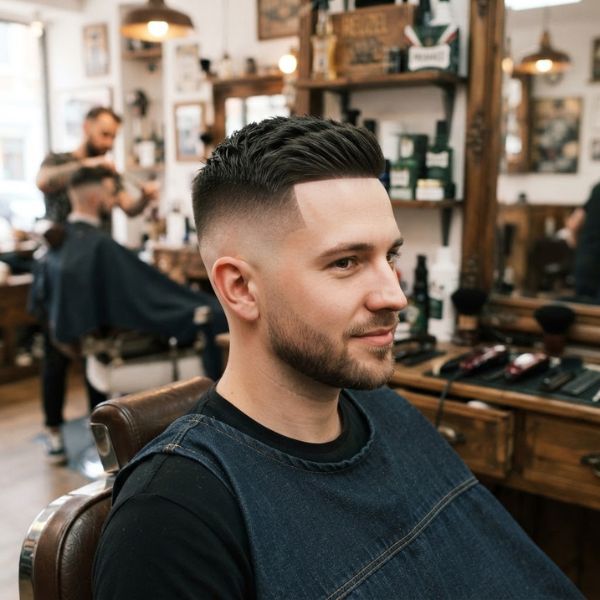
The classic version keeps moderate length on top while creating a clean, high transition on the sides.
It is a straightforward option for someone who wants noticeable contrast without an overly complicated hairstyle.
High Skin Fade
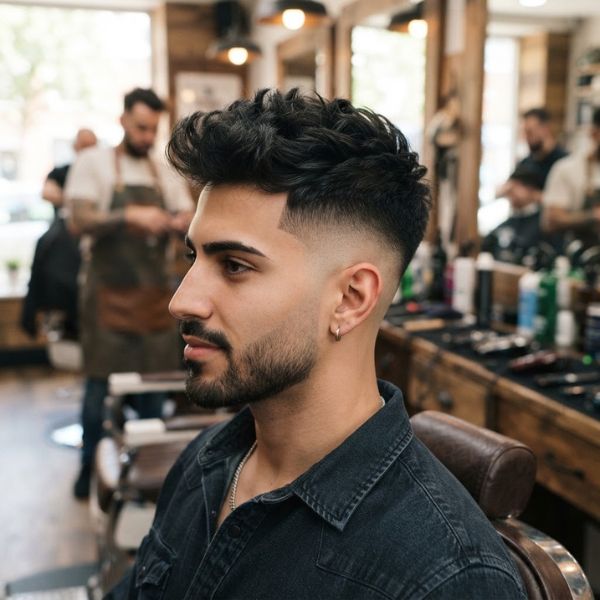
A high skin fade combines a high fade position with a bare skin finish at the shortest point.
The result is extremely sharp and creates maximum contrast between the sides and top.
High Textured Crop Fade
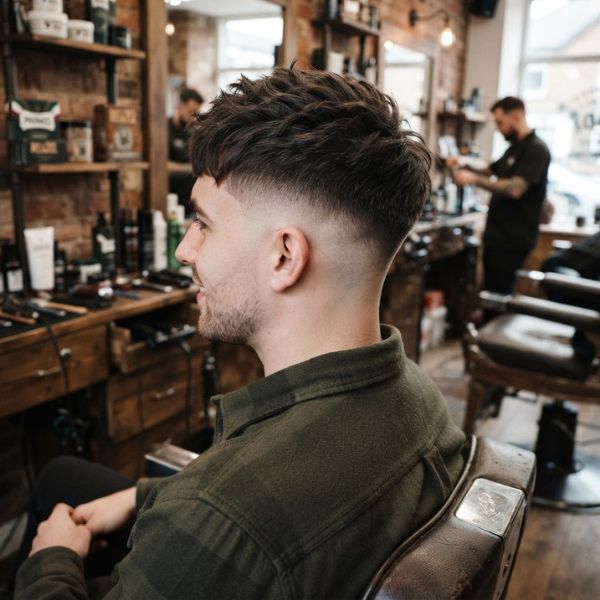
A textured crop adds separation and movement to the top while the short sides create a clean frame.
Use a matte product if you want a natural, modern finish.
High Quiff Fade
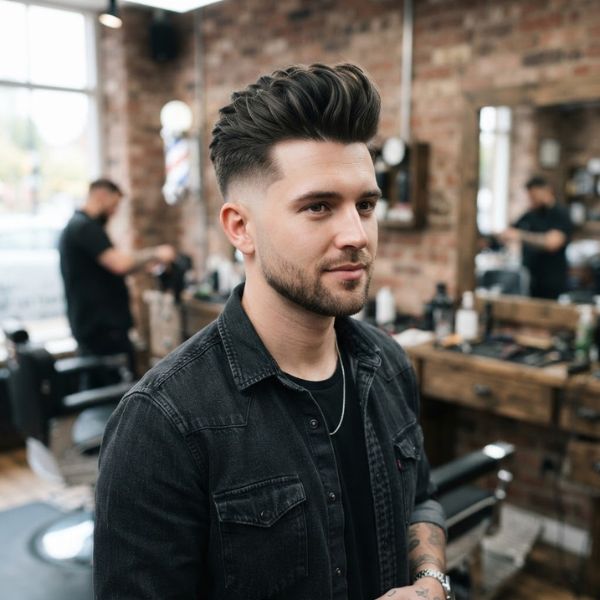
A quiff adds height toward the front and gives the haircut a more styled appearance.
The strong side contrast makes the top appear even more prominent.
High Fade With Pompadour
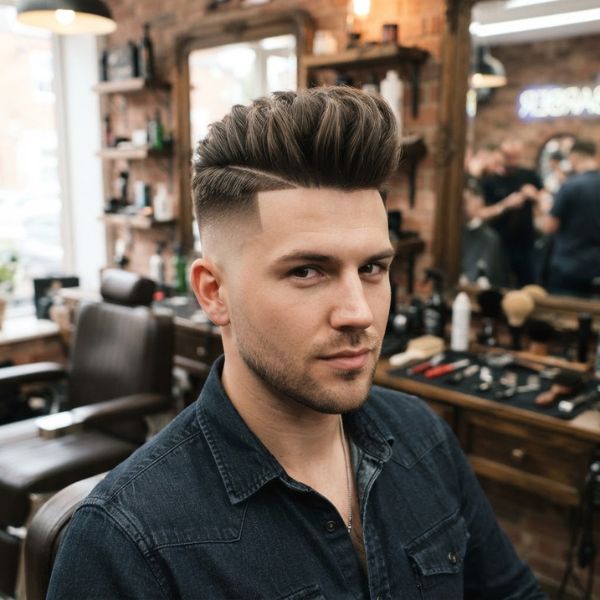
A pompadour provides significant volume at the front.
Pairing it with a high fade creates a dramatic contrast between the voluminous top and closely blended sides.
High Buzz Cut Fade

A buzz cut is one of the easiest hairstyles to combine with a high fade.
The short top requires almost no styling, while the fade creates additional definition around the sides.
High Fade With Curls

Curly hair can look particularly striking when the natural texture is concentrated on top.
The barber can remove excess side bulk while allowing the curls to remain the main feature.
High Fade With Waves
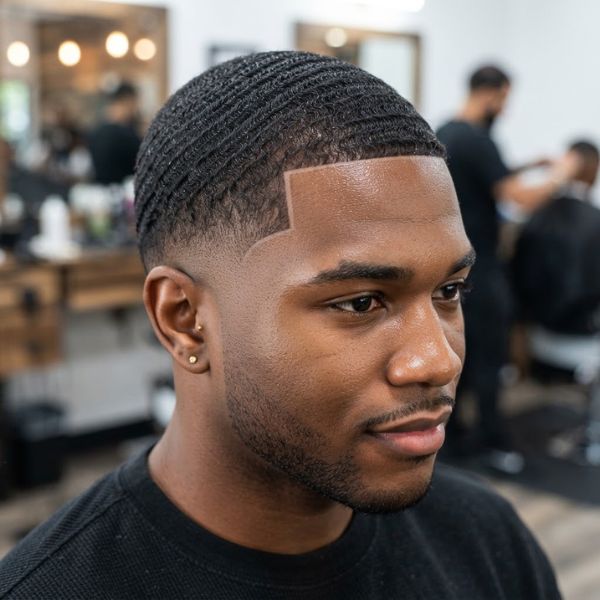
Waves create a textured surface across the top while the sides remain clean.
The strong contrast can make the wave pattern appear more defined.
High Fade With Fringe
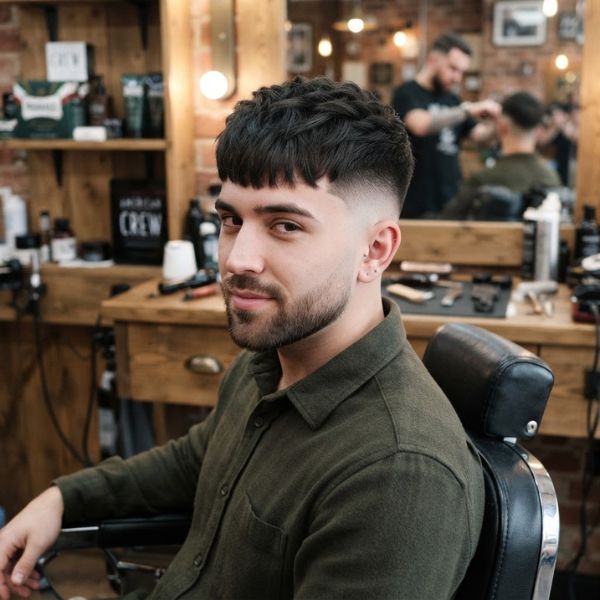
A fringe gives the haircut a contemporary appearance.
You can wear the fringe straight, textured, messy, or slightly parted depending on your hair type.
High Fade With Hard Part
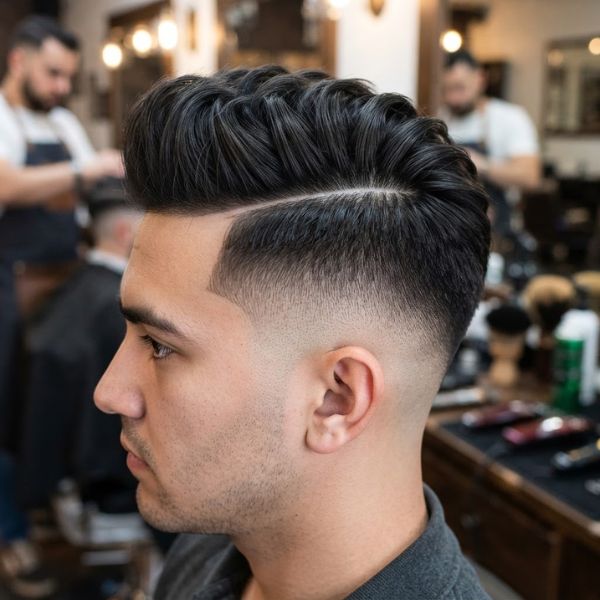
A hard part creates a defined separation between sections of the hairstyle.
Combined with a high fade, it produces a sharp and highly structured look.
High Fade With Slick Back

A slick back gives the haircut a mature appearance.
The shorter sides create contrast while the longer top can be brushed backward using pomade or styling cream.
High Fade With Side Part
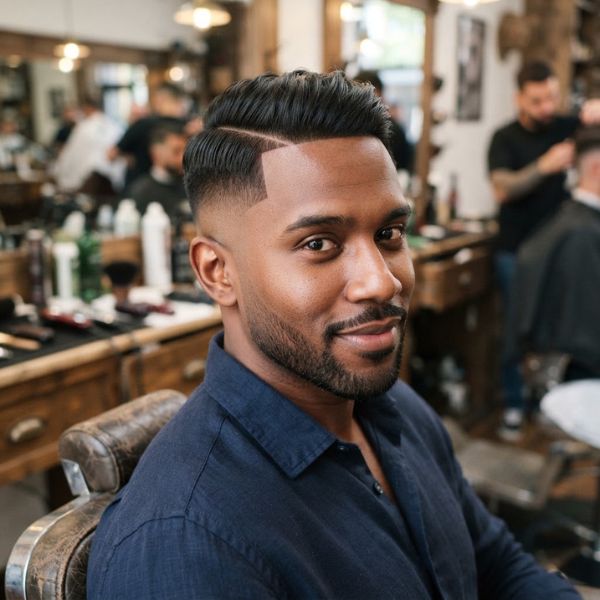
A side part combines traditional styling with modern barbering.
It can work well for people who want a professional haircut with more visible contrast.
High Fade With Long Top
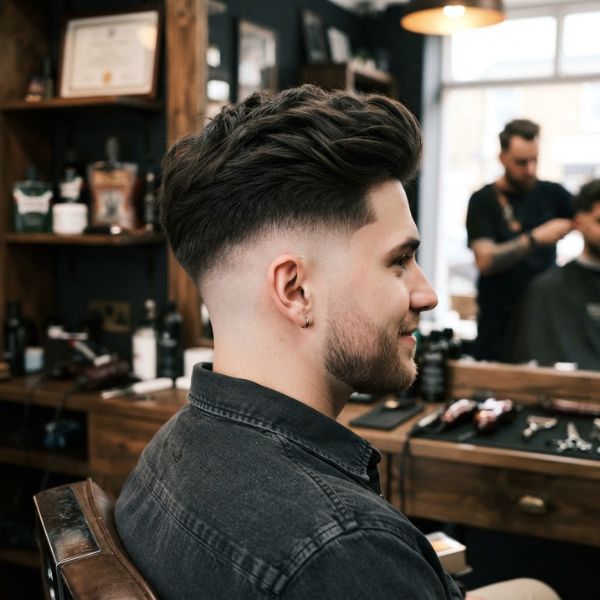
Keeping the top longer gives you more styling flexibility.
You can create a quiff, messy texture, side sweep, middle part, or brushed-back style.
High Drop Fade
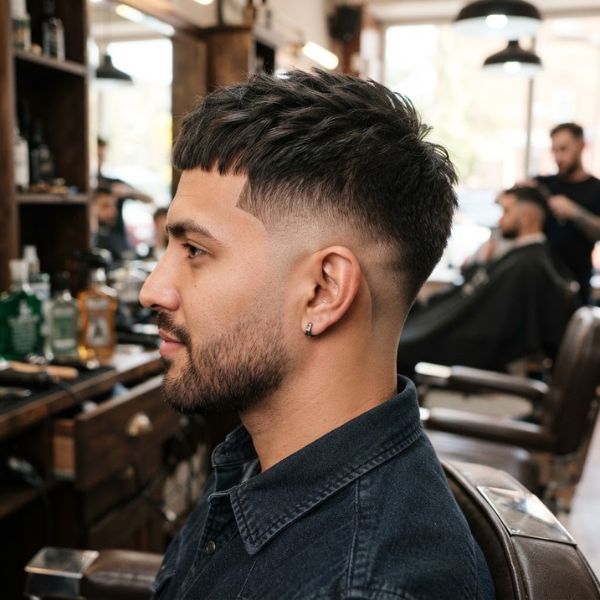
A drop fade curves downward behind the ear.
This adds more shape to the back of the haircut and can create a distinctive silhouette.
High Fade With Line-Up

A line-up creates sharp definition around the forehead and temples.
It works particularly well with short hair but requires regular maintenance to keep the edges crisp.
High Fade With Beard
A beard can be blended into the sideburns to create continuity between the haircut and facial hair.
Tell your barber whether you prefer a gradual beard connection or a more defined transition.
High Fade With Afro Texture
Tightly textured hair can work extremely well with a high fade.
The shortened sides emphasize the natural shape and volume of the hair on top.
High Fade With Short Curls
Short curls combined with a high fade create a compact and defined haircut.
Keep enough curl length to maintain the natural texture.
High Fade With Caesar Cut
A short Caesar cut paired with a high fade produces a clean, low-styling haircut.
The forward fringe creates structure while the sides remain sharply controlled.
High Fade With French Crop
A French crop gives you a textured top and short forward fringe.
The high fade creates additional contrast around the sides.
High Fade With Edgar
The Edgar style typically features a strong front shape and short sides.
Adding a high fade makes the contrast even more noticeable.
High Fade With Mohawk
A mohawk keeps greater length through the center while the sides are dramatically shortened.
The high fade can create a cleaner and more wearable version of the look.
High Fade With Faux Hawk
A faux hawk gives you central height without requiring the extreme structure of a traditional mohawk.
The faded sides help direct attention toward the middle.
High Fade With Spiky Hair
Short spikes can add texture and attitude.
Use a lightweight matte product if you want separation without excessive shine.
High Fade With Textured Messy Top
A messy top can make the haircut look relaxed rather than overly structured.
This is a useful option if you want strong sides but prefer natural movement above.
High Fade With Crew Cut
A crew cut gives you a practical top with slightly more length toward the front.
The high fade makes the overall haircut cleaner and more contemporary.
High Fade With Long Fringe
A longer fringe creates more styling possibilities while the sides remain short.
This combination works particularly well for straight and wavy hair.
High Fade With Design
Hair designs can be shaved into the faded section to create a more individual appearance.
Keep the design simple if you want the haircut to remain wearable as it grows out.
High Fade With Natural Texture
You do not need an elaborate style on top.
Natural texture combined with a clean fade can create an effortless everyday haircut.
High Fade With Tapered Beard
A tapered beard can complement the strong sides by creating a gradual transition around the jaw and sideburns.
This works especially well when the beard and haircut are maintained together.
High Fade Guard Numbers Explained
Guard numbers describe the approximate length left by the clipper.
| Guard | Approximate Length | General Result |
| No guard | Very short | Maximum scalp visibility |
| #0.5 | Around 1.5 mm | Very tight shadow |
| #1 | Around 3 mm | Short visible hair |
| #2 | Around 6 mm | Fuller short sides |
| #3 | Around 10 mm | More weight |
| #4 | Around 13 mm | Noticeably fuller |
Exact measurements can vary between clipper brands, blade settings, and cutting techniques.
A high fade does not automatically mean skin. You can choose the shortest guard according to your preferred level of contrast.
If you want a very sharp appearance, you might choose a skin or #0.5 base.
If you prefer a softer result, a #1 or #2 can leave more visible hair.
High vs Low vs Mid Fade
The biggest difference between these three styles is the position of the transition.
| Fade Type | Fade Position | Overall Look |
| Low fade | Near ears and neckline | Subtle |
| Mid fade | Around temple level | Balanced |
| High fade | Upper sides and above temple | Bold |
A high fade removes more side weight than a low or mid fade and therefore creates stronger visual separation.
Choose a low fade if you want a conservative appearance.
Choose a mid fade if you want something balanced.
Choose a high fade if you want maximum contrast and a stronger silhouette.
High Fade vs High Taper
These terms can also cause confusion.
A high taper generally focuses on selected areas such as the temples and neckline while preserving more of the side panel.
A high fade usually creates a broader gradient across the sides and back.
The difference is the amount of hair removed.
If you want to keep considerable side weight, tell your barber that you want a taper rather than a full fade.
Best High Fade for Different Hair Types
Straight Hair
Straight hair makes the fade transition highly visible.
Precision is important because uneven blending can be easier to notice.
Good combinations include:
- Textured crop
- Side part
- Quiff
- Slick back
- Fringe
Wavy Hair
Wavy hair naturally provides movement and texture.
Keeping moderate length on top allows the waves to remain visible while the sides provide contrast.
Curly Hair
Curly hair can look excellent with a high fade when the barber preserves enough length to maintain the curl pattern.
Consider shrinkage before deciding how short the top should be.
Coily Hair
Coily hair provides a strong natural texture.
This haircut can emphasize the shape of the top while keeping the sides neat and controlled.
Thick Hair
Thick hair is particularly suited to fades because removing side bulk can make the haircut easier to manage.
The top can remain longer without making the entire head look excessively heavy.
Fine Hair
Fine hair requires more consideration.
A very high and very short fade can increase scalp visibility and make the remaining top appear less dense.
A slightly longer top may create a better balance.
Which Face Shape Suits a High Fade?
This Haircut can work with many face shapes, but the top length should be adjusted carefully.
Round Face
The extra height created by the haircut can make a round face appear more elongated.
Keep some height and texture on top while controlling the sides.
Oval Face
Oval faces can generally handle many variations.
You can experiment with crops, curls, quiffs, buzz cuts, and longer textured styles.
Square Face
A square face already has strong angles.
A high fade can emphasize those features. Keeping some texture on top can prevent the haircut from appearing too rigid.
Long Face
A very high fade combined with excessive height on top can make a long face appear even longer.
Consider keeping the top moderate rather than extremely tall.
Heart-Shaped Face
A controlled top with a clean fade can balance a broader forehead and narrower chin.
Avoid excessive height if your forehead is already visually prominent.
Diamond Face
Texture and moderate top length can help balance a narrower forehead and jawline.
The fade should be shaped around the natural contours of the head.
Head Shape Matters More With a High Fade
One important consideration is head shape.
Because a high fade removes more hair from the sides, it exposes more of the natural structure of the head. This can make flat areas, prominent bones, scars, or uneven contours more visible.
Before going extremely short, consider:
- Head shape
- Occipital bone
- Flat areas
- Scalp marks
- Hairline
- Temple recession
- Crown density
- Natural growth patterns
This does not mean you should avoid the style. It simply means the barber may need to adjust the height and shape of the blend.
How to Ask Your Barber for a High Fade
The best way to request the haircut is to describe both height and length.
For example:
“I want a high fade that starts above the temples. Take the bottom to a #1 and blend it smoothly into the top. Keep about three inches on top and preserve my natural front hairline.”
For a stronger version:
“I want a high skin fade with a textured crop on top. Keep the fade high and clean, but do not push the hairline backward.”
For a softer version:
“Give me a high fade starting around the upper temple, but keep the shortest point at a #2 rather than taking it to the skin.”
Reference photographs are also useful, especially side and back views.
How Often Should You Get a High Fade?
A high fade generally requires more frequent maintenance than lower fade placements because a large portion of the sides is kept very short.
A practical schedule is:
- Skin finish: around 1 to 2 weeks
- #0.5 or #1 finish: around 2 weeks
- #2 finish: around 2 to 3 weeks
- Softer version: around 3 weeks
Current barber guides commonly recommend approximately every two to three weeks for keeping the haircut sharp, while high skin fades can show noticeable regrowth sooner.
If you prefer a softer appearance, you can stretch the time between appointments.
Is a High Fade High Maintenance?
The styling itself is usually easy.
The maintenance is mainly about keeping the fade clean.
The shorter the base, the faster regrowth becomes visible. A skin finish may look extremely sharp immediately after the appointment but can show stubble within days.
A #2 or #3 base generally gives you a softer grow-out.
If you want the sharpest possible appearance all the time, expect more frequent barber visits.
How to Style
Your styling routine depends on the length and texture of the top.
For a textured top
Use matte clay or texture paste.
For a quiff
Blow-dry the front upward before applying styling products.
For curls
Use a curl-friendly cream and avoid excessive brushing.
For a slick back
Use pomade or styling cream to create control and shine.
For a natural finish
Use a lightweight cream and style with your fingers.
Because the sides are already short, most of your styling effort should focus on the top.
Common Mistakes
A strong fade can look excellent when the proportions are right, but several mistakes can change the result.
Avoid:
- Taking the fade higher than intended
- Choosing skin without considering maintenance
- Ignoring your head shape
- Cutting the top too short
- Pushing the natural hairline backward
- Showing only a front reference photo
- Removing too much side weight
- Ignoring hair density
- Forgetting to specify the neckline
- Assuming all barbers interpret “high” identically
The safest approach is to communicate the exact fade height and shortest guard before the clippers start.
Is a High Fade Professional?
It depends on the workplace.
A clean with a classic top can look polished and professional.
However, an extremely high skin fade with a sharp design or dramatic styling may be less suitable for conservative workplaces.
If you work in an environment with formal grooming standards, consider a slightly softer version with a #1 or #2 base and a natural neckline.
Who Should Choose This Haircut?
This Haircut is a strong option if you want:
- Strong contrast
- A bold modern appearance
- Less side bulk
- A clean silhouette
- Easy daily styling
- A haircut that highlights the top
- A sharper profile
- A sporty or contemporary look
It may not be the best choice if you want significant side volume or prefer a haircut that grows out very softly.
When Should You Avoid a High Fade?
You may want to choose a lower fade if:
- You have a very long face and want to avoid additional vertical emphasis
- You dislike frequent barber visits
- You want more side volume
- Your workplace requires conservative grooming
- You are uncomfortable with scalp visibility
- You have a head shape you prefer to keep less exposed
- You want a softer grow-out
None of these are strict rules. A skilled barber can modify the height, shortest length, and top shape to create better proportions.
Frequently Asked Questions:
What is a high fade?
A high fade is a haircut where the gradual transition from short to longer hair begins high on the sides, usually around or above the temple area.
Is a high fade the same as a skin fade?
No. High describes the placement of the fade, while skin describes how short the lowest part becomes.
What guard should I use for a high fade?
Common options include #0.5, #1, and #2, depending on how much contrast and scalp visibility you want.
Is a high fade good for round faces?
Yes. The reduced side width and added emphasis on the top can create a more elongated appearance.
Is a high fade good for long faces?
It can work, but excessive height on top may make a long face appear longer, so moderate top length can create better proportions.
Does a high fade work with curly hair?
Yes. It can remove side bulk while keeping the natural curls prominent on top.
How often should I get a high fade?
Most people need a refresh about every two to three weeks, while very short skin versions may require attention sooner.
Is a high fade easy to maintain?
Daily styling is usually easy, but keeping the fade sharp requires more frequent barber visits than a lower fade.
Can I get a high fade with a beard?
Yes. The sideburns can be blended into the beard to create a smooth transition.
What should I tell my barber?
Specify the fade height, shortest guard, top length, neckline, hairline preference, and whether you want a skin, shadow, or guarded finish.
Can a high fade hide a receding hairline?
It does not hide hair loss, and taking the sides very short can sometimes make the hairline more noticeable.
Is a high fade suitable for professional settings?
Yes, a clean and moderate version can be professional, although very dramatic designs or extremely high skin fades may not suit conservative workplaces.
Conclusion
The high fade is an excellent choice when you want a bold haircut with strong contrast and a clearly defined silhouette. Its higher transition removes more side weight and makes the top stand out, which is why it pairs so well with textured crops, curls, quiffs, buzz cuts, hard parts, and other modern hairstyles. The key is understanding that fade height and shortest length are separate decisions. You can have a high fade that stops at a #2, a high skin fade, or something in between.
Before your appointment, consider your face shape, head shape, hair density, hairline, styling habits, and how often you are willing to visit the barber. Bring clear reference photos and tell your barber exactly where you want the blend to start and how short you want the base. That approach gives you much more control and makes it easier to get a haircut that suits your appearance rather than simply copying a style from a photograph.

