
The Mid Fade Haircut is the “just right” option in the fade family. It’s bolder than a low fade but less dramatic than a high one. That balance is why barbers see more requests for it than almost any other cut.
This guide explains what a mid fade is, how it compares with low and high fades, and which styles suit your hair type. You’ll also get a barber script, styling steps, and an upkeep plan.
Quick answer: A mid fade is a haircut where the sides and back blend from short to longer hair, starting around the middle of the head, roughly level with the temples and the top of the ears. It sits between a low fade and a high fade.
What Is a Mid Fade Haircut?
A mid fade starts the blend about halfway up the sides of your head. Below that point, the hair is very short or close to the skin. Above it, the hair slowly gets longer until it meets the top.
The fade line usually sits near the temple, in line with the outer edge of the eyebrow. That position gives a clean look without removing too much hair.
Key features of a mid fade:
- A smooth blend from skin or very short hair to longer hair
- A fade line at the middle of the sides and back
- Longer hair on top for styling
- A sharp but balanced look that suits most settings
Because the contrast is clear but not extreme, a mid fade works for the office, school, and weekends.
Low Fade vs. Mid Fade vs. High Fade
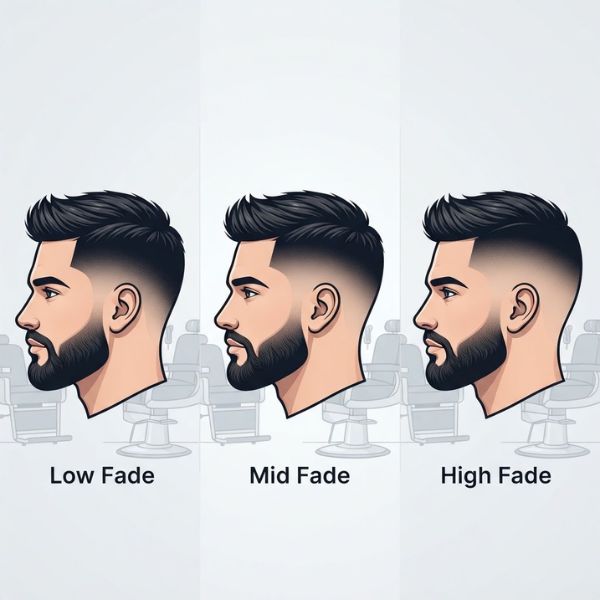
The only real difference between these cuts is where the fade starts.
| Feature | Low Fade | Mid Fade | High Fade |
| Starts at | Just above the ears | Around the temples | High on the head |
| Contrast | Subtle | Moderate | Strong |
| Skin shown | Little | Some | A lot |
| Upkeep | Easier | Medium | Frequent |
| Best for | Classic, conservative looks | Most men | Bold, modern looks |
A low fade keeps more hair and looks gentle. A high fade removes more hair and creates a strong edge. A mid fade sits comfortably between the two, which is why it’s the go-to choice when you can’t decide.
If you want a gradual finish without skin, ask about a taper. A fade, including a mid fade, usually blends all the way down.
Types of Mid Fade Haircuts
Barbers can change the bottom of the fade to give you a different effect.
Mid Skin Fade (Mid Bald Fade)
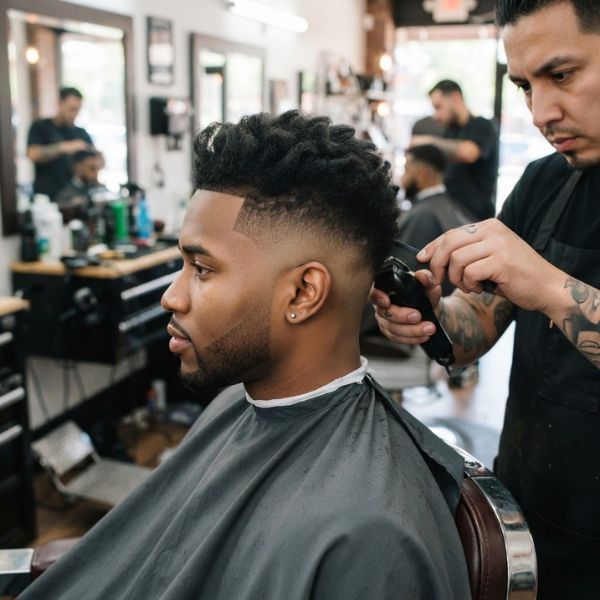
The fade goes down to bare skin at the bottom. It gives the sharpest contrast.
- Clean, modern, and eye-catching
- Needs regular upkeep
- Best with a textured or slicked top
Mid Drop Fade
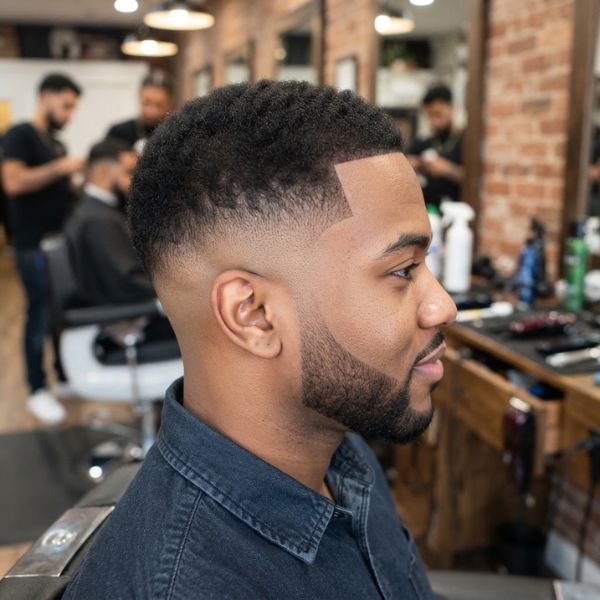
The fade line curves down behind the ear instead of running straight around. It follows the shape of the head.
- Adds a stylish curve
- Works well with longer tops
- Pairs nicely with a beard
Mid Taper Fade
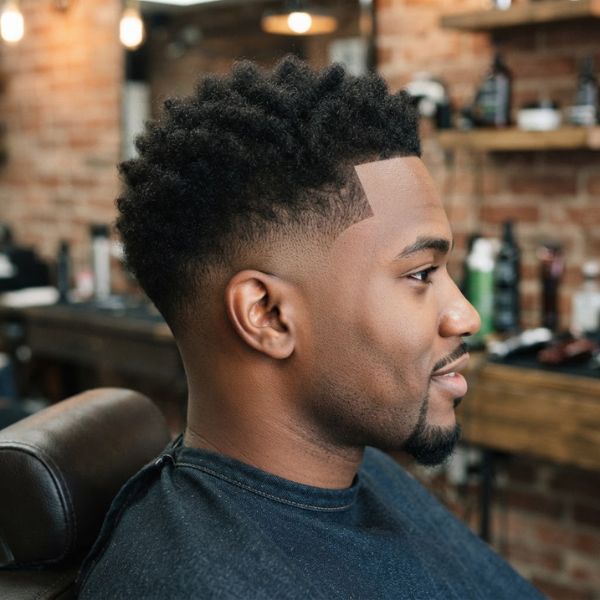
This version leaves a little length at the bottom instead of going to the skin. The blend stays soft.
- Easier to wear for work
- Grows out gently
- Good for first-timers
Mid Burst Fade
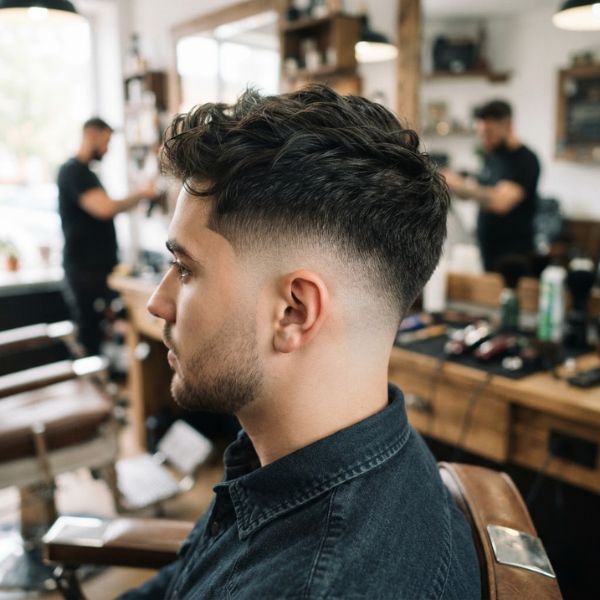
The fade curves around the ear and fades toward the back, leaving more hair at the nape. It’s often paired with a mohawk or a longer back.
- Bold and fashion-forward
- Suits curls and longer tops
- Calls for a skilled barber
Best Mid Fade Styles
Your top length decides the overall look.
Mid Fade with Textured Crop
Short, choppy hair on top with a clean fade on the sides. It’s easy to style and looks sharp.
Mid Fade with Quiff
Volume at the front with the sides blended close. Use a light-hold product and a blow dryer for lift.
Mid Fade with Pompadour
A high, swept-back top with a tight fade. This is a classic that still looks current.
Mid Fade with Slick Back
Hair combed back with the fade keeping the sides tight. It’s polished and suits formal settings.
Mid Fade with Curly Top
Natural curls on top with clean sides. The fade keeps the shape tidy and highlights the texture.
Mid Fade with Buzz Cut
A very short top paired with a mid fade. It’s low maintenance and bold.
Mid Fade with Beard
The fade blends into a short beard for a seamless line. This is one of the most popular pairings.
Mid Fade with Long Top
Hair 4 inches or longer on top, with a mid fade at the sides. The contrast looks deliberate and stylish.
Mid Fade by Hair Type
Different textures need different techniques.
Straight Hair
Straight hair shows every line, so the blend must be smooth.
- Try a side part or textured crop
- Use matte paste for control
- Avoid heavy shine if your hair is fine
Wavy Hair
Wavy hair adds movement on top. The fade keeps the sides tidy so the waves stand out.
- Keep 3 to 4 inches on top
- Use sea salt spray or light cream
- Air dry or diffuse on low
Curly Hair
A mid fade frames curls and gives a polished shape.
- Leave curls longer on top
- Use curl cream and avoid brushing dry curls
- A mid drop fade often looks great here
Coily and Afro Hair
A mid fade suits coily textures well. It sharpens the outline and lets the top stand out.
- Pair with twists, a short afro, or a high top
- Moisturise daily
- Ask for a clean but natural line-up
Thick Hair
Thick hair can look bulky on the sides. A mid fade removes that weight.
- Ask for texturizing on top
- Keep the fade tight and clean
Thin or Fine Hair
A mid fade can make thin hair look fuller by adding contrast.
- Keep the top short and textured
- Use light products only
- Avoid very high fades, which can expose thinning areas
Which Face Shapes Suit a Mid Fade?
A mid fade works on most faces, but small tweaks help.
- Oval: almost any mid fade works
- Round: add height on top to elongate the face
- Square: a softer top balances a strong jaw
- Long or oblong: keep the top shorter, not too tall
- Heart-shaped: keep some length on top and a clean fade
If you’re unsure, show your barber a photo and ask what suits your face.
How to Ask Your Barber for a Mid Fade
Many cuts go wrong because of unclear instructions. Use simple language and bring photos.
Try this script:
- “I’d like a mid fade with [skin / taper / drop] at the bottom.”
- “Please start the fade around my temples.”
- “Leave [length] on top.”
- “Blend it smoothly with no harsh lines.”
- “I want a [natural / sharp] line-up.”
Useful details to share:
- Your hair type and daily styling routine
- Whether you have a beard
- How often you can visit
Pictures from the front, side, and back make the request clearer. If you want to know the guard sizes, ask the barber what they plan to use. Most start with a #0 or #1 at the bottom and move up.
How to Style a Mid Fade at Home
Styling takes about five minutes.
- Wash and towel dry your hair.
- Apply a pea-sized amount of product to damp hair.
- Blow dry the top, using your fingers to guide the shape.
- Add a little more product for hold.
- Check the sides and back for balance.
Choose product by finish:
| Look | Best Product |
| Natural | Sea salt spray or cream |
| Textured | Matte clay or paste |
| Slick | Pomade or light gel |
| Curly | Curl cream or leave-in |
Start with less than you think you need. You can always add more.
Mid Fade Maintenance Plan
A mid fade looks best when it’s fresh, so a routine helps.
Every 2 to 3 Weeks
- Book a quick clean-up for the sides, neckline, and edges
- This keeps the fade sharp and the blend smooth
Every 4 to 6 Weeks
- Get a full cut to refresh the top
- Ask your barber to adjust the length if needed
Daily and Weekly Care
- Wash your hair 2 to 4 times a week
- Use a gentle shampoo and conditioner
- Moisturise your scalp if it feels dry
- Wear sunscreen or a hat if the sides are very short
Skin fades show growth faster than taper-style fades. If you want a lower-maintenance option, ask for a mid taper instead.
Common Mid Fade Mistakes and Fixes
| Mistake | Cause | Fix |
| Fade sits too high | Unclear request | Say “starting at the temples” and show photos |
| Visible lines | Rushed blending | Ask the barber to soften the transition |
| Grows out messy | Too long between cuts | Book clean-ups every 2 to 3 weeks |
| Top looks flat | Too much product | Use less and add texture spray |
| Doesn’t suit face | Wrong top length | Match the top to your face shape |
| Dry scalp | Overwashing or razor use | Moisturise and use mild shampoo |
Most problems are easy to fix with a quick visit and a clearer request next time.
Read More: Cukuran Taper Fade: The Complete Guide to Styles, Cutting Steps and Upkeep in 2026
Mid Fade vs. Other Haircuts
- Mid fade vs. taper fade: a taper is subtler and keeps more hair. A mid fade has more contrast.
- Mid fade vs. undercut: an undercut has a sharp, disconnected line. A fade blends.
- Mid fade vs. buzz cut: a buzz cut is one length. A mid fade has variation and shape.
- Mid fade vs. crew cut: a crew cut is shorter on top and more traditional. A mid fade offers more styling options.
FAQ’s:
What is a mid fade haircut?
It is a haircut where the fade starts around the temples and blends the sides into the longer top.
What is the difference between a low, mid, and high fade?
The only difference is where the fade starts: low near the ears, mid at the temples, high above them.
Is a mid fade professional?
Yes. A mid fade with a neat top fits most workplaces.
How often should I get a mid fade?
Every 2 to 3 weeks for a sharp look, or every 4 to 6 weeks for a softer one.
Does a mid fade suit round faces?
Yes. Adding height on top helps lengthen a round face.
Can I get a mid fade with curly hair?
Yes. Keep the curls longer on top and ask for clean sides.
Does a mid fade work with a beard?
Yes. Your barber can blend the fade into the beard for a smooth line.
How long should the top be for a mid fade?
Anywhere from 1 to 5 inches works, depending on your style.
Is a mid fade good for thinning hair?
It can be. The contrast draws attention to the top, especially with a short textured cut.
Can I do a mid fade at home?
It’s possible with good clippers, but blending takes practice. A barber gives cleaner results.
Conclusion
The mid fade is a safe and stylish choice. It gives you contrast without going too extreme, and it works with nearly every hair type and top length. Choose the version that fits your routine, from a skin fade for a sharp edge to a taper for a softer look.
Bring clear photos, use a short script at the barbershop, and keep up with regular clean-ups. That’s all it takes to keep your mid fade looking fresh.

