
A V fade haircut is a fade where the hair at the back is shaped into a sharp V, usually at the nape of the neck. It gives a clean, modern finish from every angle, and it works on short, medium, and long hair on top.
The look has stayed popular because it adds detail to a classic fade without needing a long routine. Barbers love it for the precision. Clients love it because the back view finally looks as good as the front.
This guide covers what the cut is, 15 styles to bring to your next appointment, daily styling, upkeep, and a barber-level breakdown of how it is done.
What Is a V Fade Haircut
A V fade haircut combines a fade on the sides with a V-shaped line cut into the back of the head. The fade can be low, mid, or high. The V points down toward the center of the nape.
You may also hear it called a V cut fade, a V shape fade, or a mid fade en V. The terms overlap, but they usually mean the same thing.
Two common meanings:
- V-shaped nape: The hair at the back is cut into a V, so the fade flows down to a point.
- V-shaped design: A V line is shaved into the fade or the back as a detail.
Most men mean the first one. When you book, say which you want.
Why men choose it:
- It adds a sharp, custom detail to a simple fade
- It defines the neckline and looks clean as hair grows
- It works with many top styles, from crops to quiffs
- It suits straight, wavy, and curly hair
Quick guide to fade levels:
- Low fade: Starts near the ear and neckline. Subtle.
- Mid fade: Starts around the temple. Balanced.
- High fade: Starts high on the head. Bold and high contrast.
15 Fresh V Fade Haircut Designs to Upgrade Your Style in 2026
Each idea below includes who it suits and a tip for the barber chair.
1. High V Fade Haircut
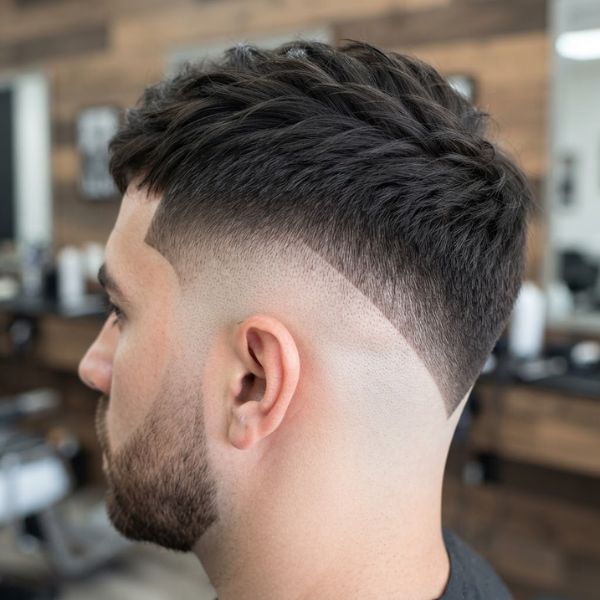
The fade starts high on the sides and ends in a sharp V at the nape. The contrast is strong, and the look is clean and bold.
Best for: Men who want a standout cut and do not mind frequent upkeep.
Tip: Ask for a smooth blend above the ears so the high line does not look harsh.
2. Low V Fade Haircut
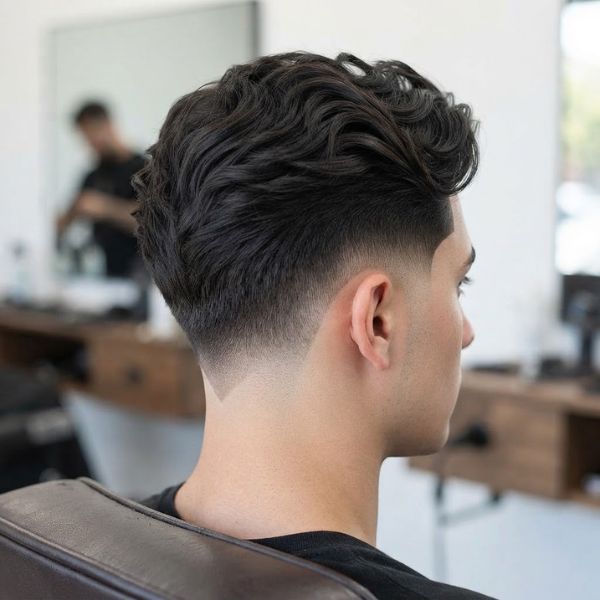
This version keeps the fade near the ears and neckline. It is subtle and office friendly.
Best for: Beginners and anyone with a conservative dress code.
Tip: Because the fade is low, the V shape at the back carries the style. Make sure it is symmetrical.
3. Mid Fade Haircut V Shape
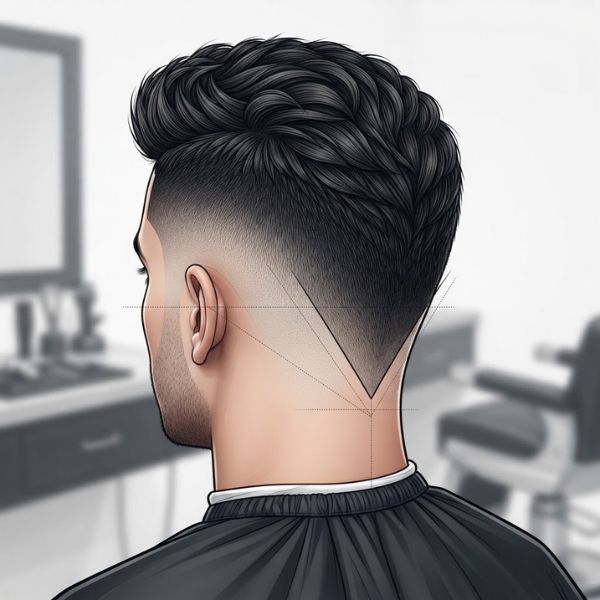
The mid fade is the most balanced choice. It starts at the temple and tapers into the V.
Best for: Almost everyone. It suits most face shapes.
Tip: Say “mid fade with a V at the nape” so your barber knows the exact shape.
4. V Drop Fade Haircut
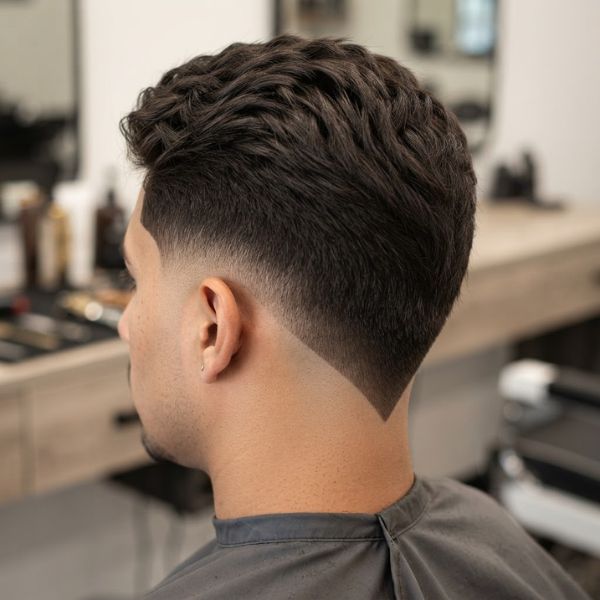
A drop fade curves down behind the ear. Combined with a V, it creates a flowing line from the sides to the back.
Best for: Men who like curves and a more custom shape.
Tip: Ask your barber to follow the natural curve of your head for a smooth drop.
5. V Taper Fade Haircut
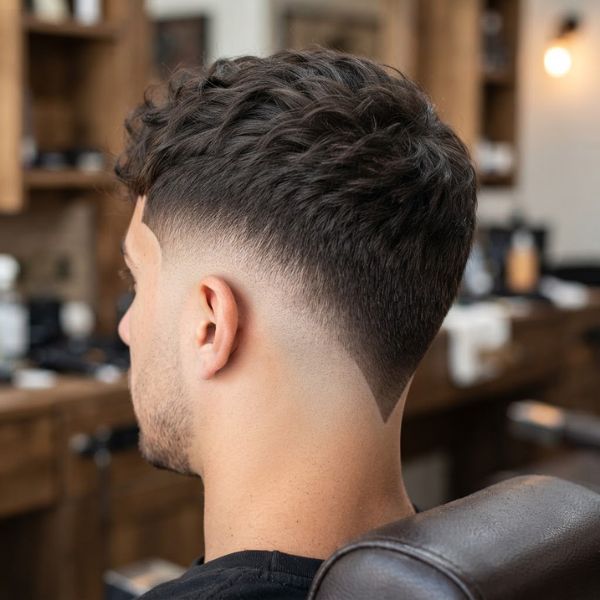
A taper fade leaves a little hair at the neckline instead of going to skin. The V sits softly in that taper.
Best for: Men who want a clean cut with less contrast.
Tip: Choose a taper if your skin shows razor irritation easily.
6. V Shape Fade Haircut Straight Hair
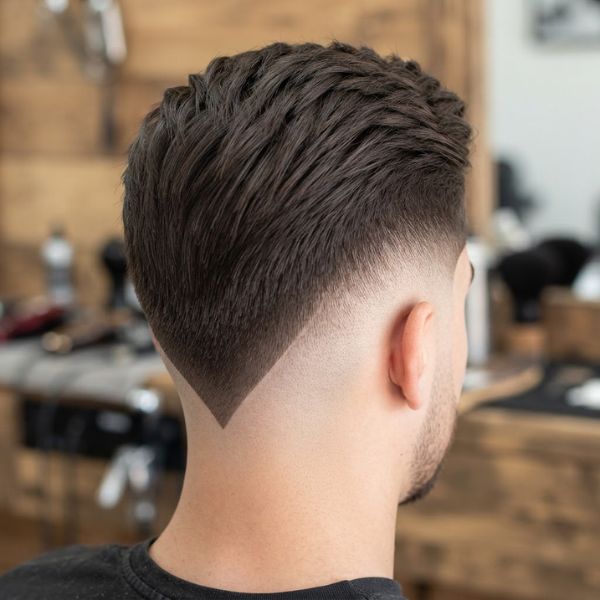
Straight hair shows every line, so the V stands out clearly. Layered texture on top balances the sharp sides.
Best for: Men with straight hair who want a precise look.
Tip: Use a light matte clay to add grip, because straight hair can fall flat.
7. Burst Fade Haircut V Cut
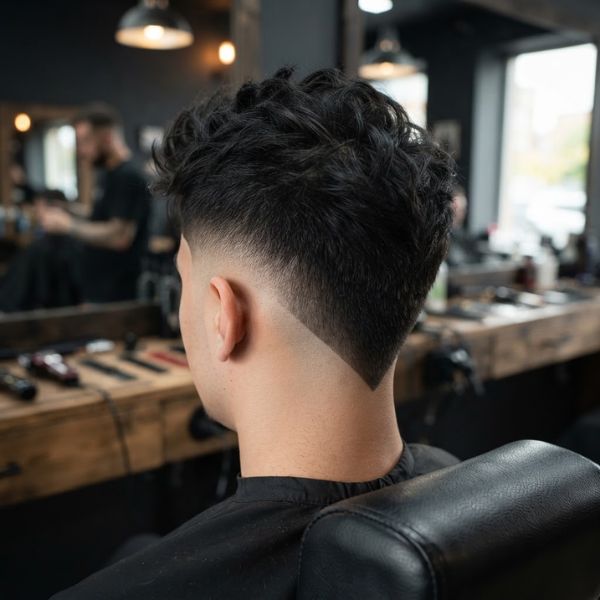
A burst fade curves around the ear like a semicircle, then blends into a V at the back. It pairs well with longer top hair.
Best for: Men with longer tops, mullets, or mohawks.
Tip: Be clear that you want the burst to wrap around the ear only, not the whole head.
8. Skin V Fade Haircut

The fade goes all the way down to bare skin before blending upward. The V looks razor sharp against the skin.
Best for: Men who want maximum contrast.
Tip: Expect a touch-up every one to two weeks to keep the shape crisp.
9. Bald V Fade Haircut
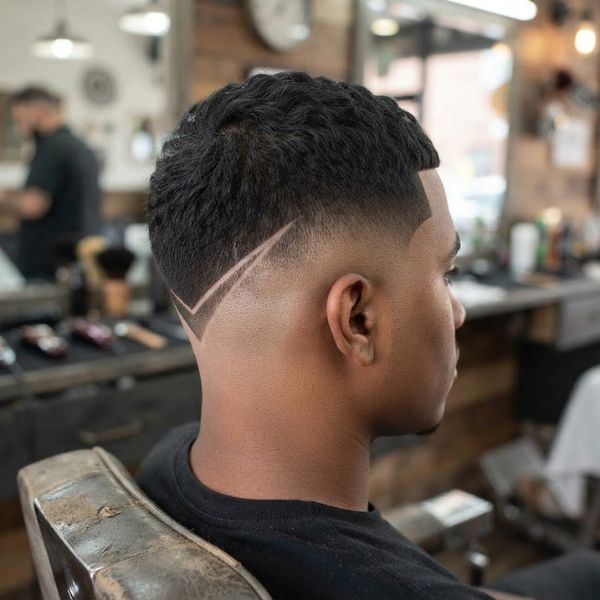
Also called a bald fade, this style shaves the lower sides and back very close. The V is defined at the nape.
Best for: Men who like a bold, clean finish.
Tip: Moisturize the scalp afterward, because bare skin dries out quickly.
10. Curly Hair V Fade Haircut
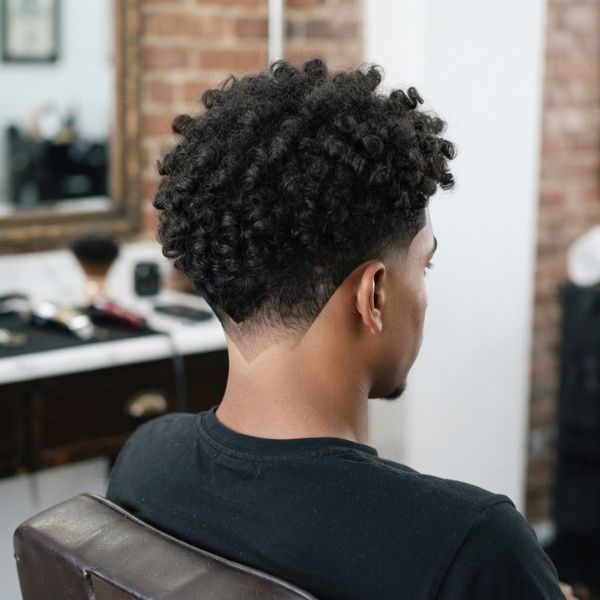
Curly tops look great against a tight fade. The V at the back keeps the shape neat even as curls grow.
Best for: Men with natural curls or coils.
Tip: Ask your barber to leave enough length on top for curl definition, usually two to four inches.
11. V Fade Haircut With Beard
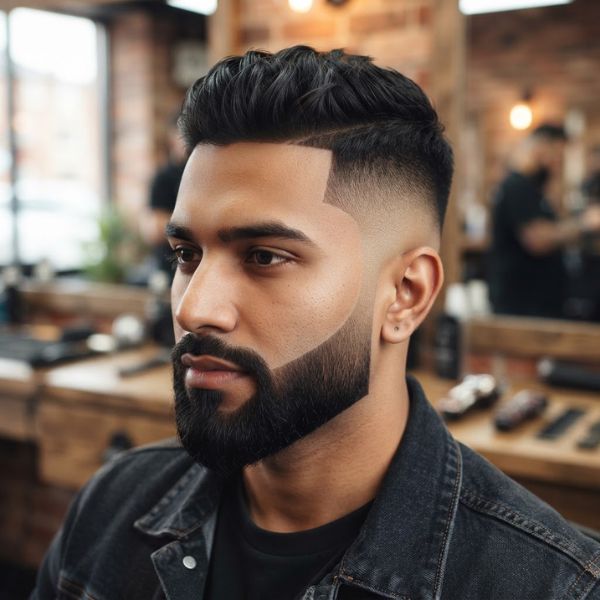
A fade that blends into a beard adds balance. The V at the neckline frames the lower face.
Best for: Men with medium to full beards.
Tip: Ask for the fade and beard to be blended at the sideburns so there is no hard line.
12. V Fade Mohawk Haircut

A mohawk sits on top while the sides fade down. The V at the back finishes the shape from behind.
Best for: Confident men who want a statement look.
Tip: Keep the top textured, not slicked, for a modern feel.
13. Comb Over V Fade Haircut
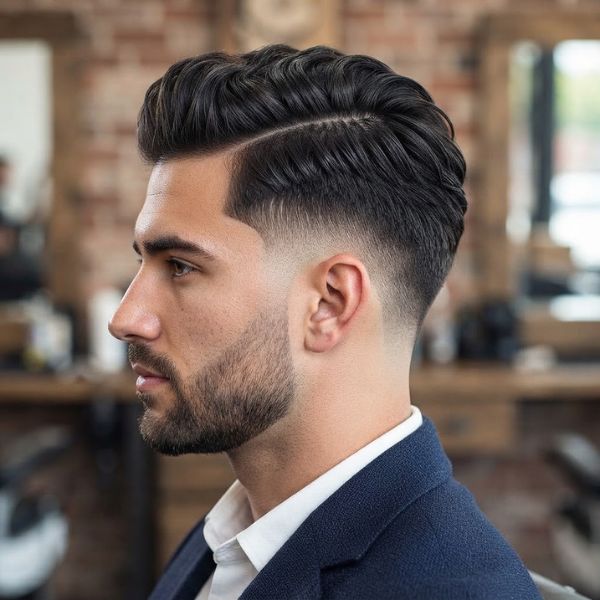
A side part with a fade is a classic. Adding the V gives the back a more current feel.
Best for: Professional settings and formal events.
Tip: Use a hard part line for a sharper finish, or skip it for a softer one.
14. Slick Back V Fade Haircut

Hair is combed straight back with a fade on the sides. The V at the nape adds detail without breaking the clean line.
Best for: Men with medium length on top.
Tip: A water-based pomade gives hold without stiffness and washes out easily.
15. Textured Crop V Fade Haircut
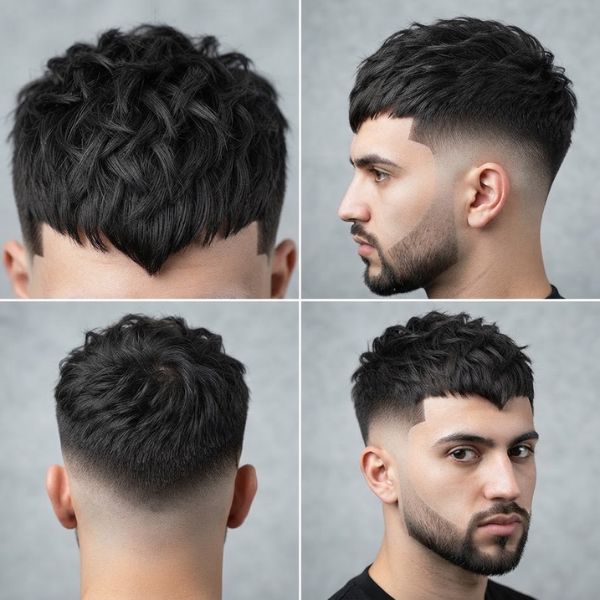
A short, choppy crop sits on top of a mid or low fade. It is easy to style and looks great with a V.
Best for: Busy men who want a low-effort cut.
Tip: Ask for point cutting on top to build natural texture.
How To Style V Fade Haircut
The fade does most of the work. Your job is to style the top so it matches the sharpness of the sides.
Choose The Right Hair Product
Match the product to the finish you want.
- Matte clay: Texture and hold with no shine
- Pomade: Shine and control for slick styles
- Sea salt spray: Light texture for crops
- Curl cream: Definition for curly hair
Use a small amount. You can always add more.
Keep The Fade Fresh
A fade looks best within the first week or two. Between visits, wipe away stray hairs along the neckline with a clean towel. Do not trim the fade yourself unless you know what you are doing.
Style The Top Hair Daily
- Start with towel-dried hair
- Apply a pea-sized amount of product
- Shape with your fingers or a comb
- Check the sides and back in a mirror
This takes about two minutes.
Use A Blow Dryer For Volume
A blow dryer adds lift and shape, especially for quiffs and textured tops. Dry the roots first and point the airflow up and back. Finish with a cool shot to lock the shape.
Maintain Healthy Hair
Healthy hair holds styles better. Use a gentle shampoo, condition the top, and avoid excessive heat. Drinking water and eating enough protein also support hair strength.
How to Maintain V Fade Haircut
A V fade haircut is a precision cut. It looks great fresh and loses its shape quickly as hair grows.
Get Regular Touch-Ups
Timing depends on the fade type:
- Skin or bald fade: Every 1 to 2 weeks
- Mid or high fade: Every 2 to 3 weeks
- Low or taper fade: Every 3 to 4 weeks
Short touch-ups are often cheaper than a full cut. Ask your barber about a “line up and clean up” service.
Wash Your Hair Properly
Wash two to four times a week, depending on your scalp. Overwashing strips natural oils, while underwashing builds up product. Rinse thoroughly, especially along the fade.
Keep the Neckline Clean
The V is the star of the cut. Once it grows out, the sharp shape blurs. A barber can clean it quickly, and a neck trimmer can help between visits if you are careful.
Use the Right Styling Products
Heavy products can clog pores along the scalp and leave residue in short hair. Pick light, water-based options when possible, and rinse them out fully.
Protect Your Hair and Scalp
Newly faded skin is sensitive. Apply sunscreen when outdoors, and moisturize after shaving or skin fades. Avoid scratching irritated areas.
How to Do a V Fade Haircut: Step-by-Step Barber Guide
This section is for aspiring barbers and anyone curious about the process. It is not a DIY recommendation. A V fade takes practice, and mistakes show.
Introduction
You will need clippers, trimmers, guards (usually #0 to #4), a comb, a foil shaver, and a cape. Always work on clean, dry hair for better control.
1. Create the Initial Guideline
Decide where the fade begins. Use a mid guard such as a #2 or #3 to mark the bottom of the fade zone. Keep the line level around the head.
2. Set the Second Guideline
Set a second line above the first, typically with a #3 or #4. This defines the top of the fade zone and gives you boundaries for blending.
3. Build the Fade with Guards
Work upward in layers. Start with a short guard at the bottom, then step up to longer ones. Blend each layer into the next with small flicking motions.
4. Avoid Stretching the Fade
Do not rush through one guard length and hope the blending hides it. A stretched fade has uneven or unclear steps. Take smaller steps and check often in the mirror.
5. Use the Clipper Corners for Blending
Turn the clipper so the corner of the blade touches the hair. This helps soften lines where two lengths meet. Use light pressure and short strokes.
6. Follow the Three-Step Lever Method
The lever on the clipper adjusts blade position. Use it to control length without changing guards.
- Closed: Shortest cut, for the bottom of the fade
- Half open: Medium length, for the middle
- Fully open: Longest cut, for the top of the fade
Move through the three positions slowly as you work up the head.
7. Detail the V Shape
Use a trimmer to mark the center point of the nape. Cut two clean lines from the outer edges down to that point. Check that both sides are equal. Step back and compare from behind.
8. Finish with a Foil Shaver
A foil shaver cleans up the skin along the fade and V line. Use it gently, with short strokes. Wipe away hair, add a light aftershave balm, and check the final blend.
Read More: 14 Trendy Mullet Fade Haircuts for Men to Try in 2026
FAQ’s:
What is a V fade haircut?
It is a fade haircut with a V-shaped line at the nape of the neck, giving the back a sharp and clean finish.
Is a V fade the same as a mid fade?
No. A mid fade describes where the fade starts, while a V describes the shape at the back. They are often combined.
Does a V fade work on curly hair?
Yes. It frames curls neatly and keeps the sides tidy as hair grows.
How often should I get a V fade haircut touched up?
Every 1 to 2 weeks for skin fades, and every 2 to 4 weeks for taper or low fades.
What face shape suits a V fade haircut?
Most face shapes work, especially oval and square. A barber can adjust height and top length to balance your features.
Can I get a V fade with a beard?
Yes. Blend the fade into the beard at the sideburns for a smooth transition.
Which is better, a skin fade or taper fade for a V?
A skin fade has more contrast, while a taper is softer and easier to maintain. Pick based on your style and skin sensitivity.
How do I ask my barber for a V fade haircut?
Say the fade level, the base (skin or taper), and “a V shape at the nape,” then show a photo of the back.
How long should my hair be on top?
Two to four inches suits most styles. Crops can be shorter, and slick backs often need more.
Is a V fade professional enough for work?
Yes, especially a low or taper version with a neat top. It looks polished in most workplaces.
Conclusion
A V fade haircut gives men a sharp, modern cut that looks good from every angle. With 15 variations to choose from, you can match the style to your hair type, beard, and lifestyle. Pick the fade level that fits your routine, bring a clear photo, and tell your barber exactly where you want the V.
Keep it fresh with regular touch-ups, a clean neckline, and light styling products. If you plan to try it yourself, learn the guard system and lever method first, and practice slowly. For most men, a skilled barber is the best choice for a clean, lasting result.

